
When you test water quality, accuracy and speed are essential. Ion Chromatography lets you quickly identify contaminants like nitrates and chlorides at very low levels, which traditional methods might miss. It separates ions based on their charge and size, giving you precise results every time. But understanding exactly how this technique works and why it’s becoming a standard in water analysis reveals even more about its impact on safety and regulation.

How Ion Chromatography Detects Contaminants in Water
How does ion chromatography detect contaminants in water so effectively? You rely on this technique because it separates ions based on their charge and size, giving you clear, accurate results.
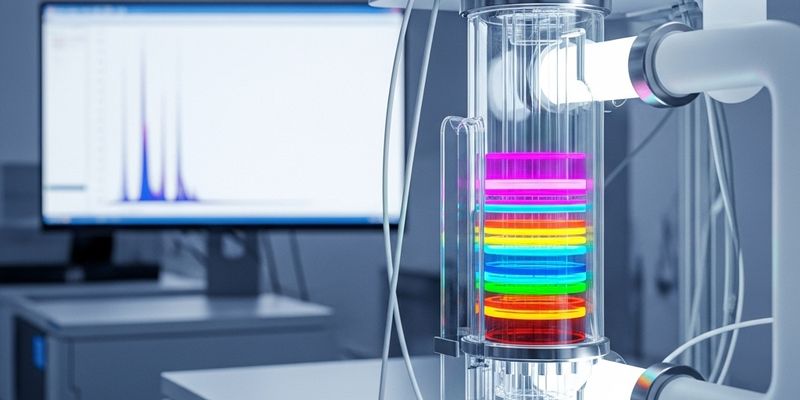
When you pass a water sample through a specialized column Lab Alliance, different ions interact uniquely with the column material, causing them to travel at different speeds. This separation lets you identify and quantify individual contaminants quickly.
You don’t have to guess or rely on slow, imprecise methods anymore. Plus, ion chromatography offers sensitivity that picks up even trace amounts, ensuring you catch problems early.
Key Ions Measured by Ion Chromatography to Assess Water Quality
Although water contains many different ions, ion chromatography focuses on a select group that most directly impacts water quality and safety. You’ll primarily measure anions like chloride, nitrate, sulfate, and fluoride because they reveal contamination from agricultural runoff, industrial waste, or natural sources.
Cations such as sodium, potassium, calcium, and magnesium are also vital—they affect water hardness and taste, influencing daily use and health. Detecting these ions helps you spot pollution early, ensuring the water you rely on stays safe and clean.
Speed and Accuracy Advantages of Ion Chromatography
Measuring key ions like chloride and nitrate gives you valuable insight into water quality, but getting results quickly and accurately makes those insights even more practical. Ion chromatography lets you move fast without sacrificing precision, so you can make confident decisions sooner.
Here’s how it helps you gain freedom in your testing:
- Achieve rapid analysis times, often under 30 minutes per sample.
- Detect ions at very low concentrations with high sensitivity.
- Reduce manual errors through automated sample handling.
- Generate consistent, reproducible data you can trust.
With these speed and accuracy benefits, you’re not tied down by long waits or unreliable results. Instead, you get the freedom to respond swiftly and ensure water remains safe and clean.
How Ion Chromatography Helps Meet Water Quality Regulations
Because water quality regulations demand precise monitoring of contaminants, ion chromatography gives you a reliable tool to meet those standards efficiently. It allows you to detect and quantify ions like nitrates, chlorides, and sulfates quickly and accurately, ensuring your water samples comply with legal limits.
With its high sensitivity, you won’t miss trace levels that could cause regulatory issues. Plus, ion chromatography’s automated process reduces human error, helping you maintain consistent, defensible results.
Real-World Benefits for Environmental Monitoring and Safety
When you rely on ion chromatography for environmental monitoring, you gain timely, accurate insights that protect ecosystems and public health. This powerful technique lets you detect contaminants quickly, so you can act before problems escalate. It gives you the freedom to make informed decisions, safeguarding water sources without guesswork.
Here’s how ion chromatography benefits you directly:
- Identifies harmful ions at low concentrations, ensuring early detection.
- Supports compliance with environmental regulations effortlessly.
- Enables real-time monitoring for rapid response to pollution events.
- Provides reliable data that informs sustainable water management.
Conclusion
You can rely on ion chromatography to make water quality testing faster, more precise, and highly sensitive. By accurately detecting key ions like nitrates and chlorides at trace levels, it helps you catch contamination early and stay compliant with regulations. Its automated process reduces errors and provides consistent results, so you can confidently protect public health and the environment. With ion chromatography, you’re equipped to monitor water quality effectively and keep ecosystems safe.
